

Indian universities can move beyond manufacturing to lead global semiconductor innovation
Engineering excellence demands more than skill, it requires adaptability and judgement, says Dr. Padmakumar Nair, Vice-Chancellor, Thapar Institute of Engineering and Technology
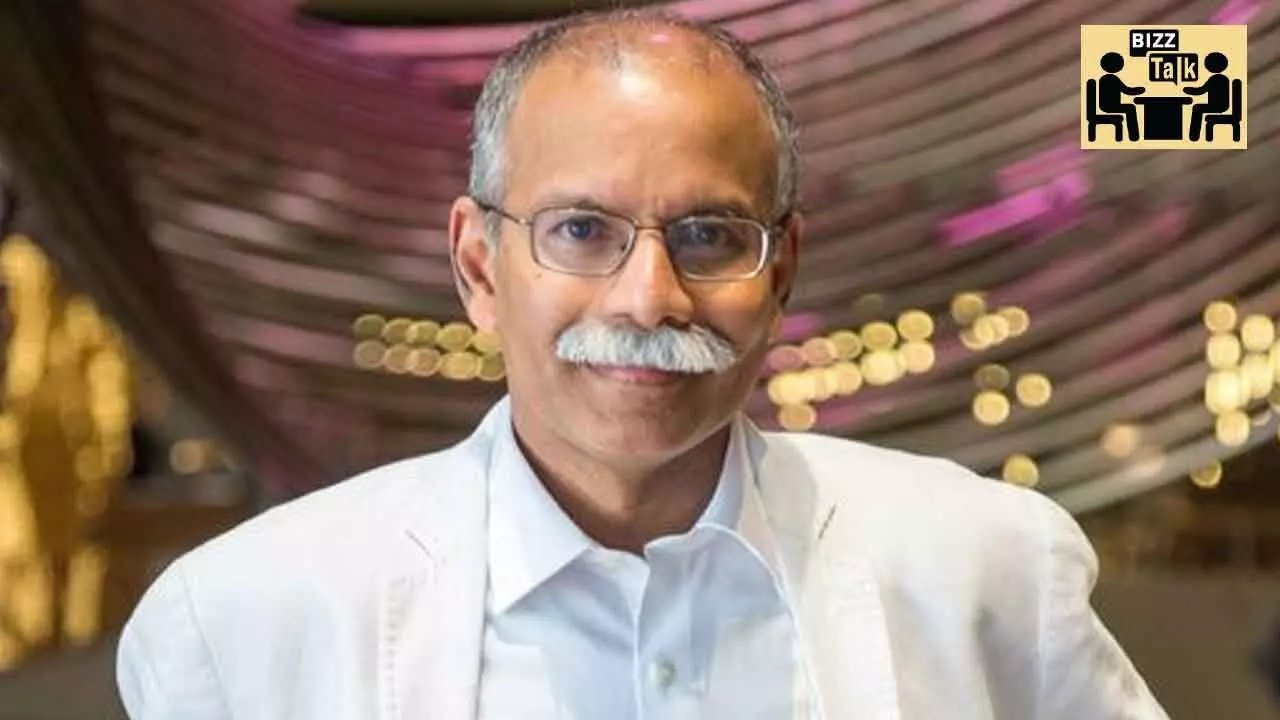
Professor Dr. Padmakumar Nair, Vice- Chancellor, Thapar Institute of Engineering and Technology
Semiconductors represent both a technological and strategic priority for India. However, meaningful participation requires long-term institutional investment and ecosystem collaboration. First, universities must invest in advanced laboratories that enable fabrication exposure, materials characterisation, nanoscale engineering, and device testing.
Even if full-scale fabrication facilities are limited to national centres, universities must create strong simulation, design, and prototyping environments,” says Professor Dr. Padmakumar Nair, Vice-Chancellor, Thapar Institute of Engineering and Technology in an exclusive interaction with Bizz Buzz
What investments in infrastructure are required for Indian universities to effectively engage with the semiconductor ecosystem?
Semiconductors represent both a technological and strategic priority for India. However, meaningful participation requires long-term institutional investment and ecosystem collaboration.
First, universities must invest in advanced laboratories that enable fabrication exposure, materials characterisation, nanoscale engineering, and device testing. Even if full-scale fabrication facilities are limited to national centres, universities must create strong simulation, design, and prototyping environments.
Secondly, interdisciplinary integration is essential. Semiconductor innovation is not only in electrical engineering. It involves materials science, chemical engineering, physics, data science, and increasingly AI-driven optimisation. Academic structures must reflect this convergence.
Thirdly, industry partnerships are critical. Curriculum and research must align with manufacturing realities. Collaborative programmes with industry partners allow students and faculty to work on real problems rather than theoretical exercises.
Finally, talent pipelines must begin early. Undergraduate exposure, research internships, and international collaboration will be key to building a workforce capable of supporting India’s semiconductor ambitions.
If universities approach this strategically, India has the potential to build not just manufacturing capability but deep intellectual leadership in semiconductor innovation.
Can robotics research at the university help address India-related challenges in the agriculture, healthcare, or logistics sectors?
Robotics becomes meaningful when it moves beyond automation for efficiency and begins solving accessibility and scale challenges. India presents unique opportunities because many of our sectors operate under constraints very different from Western economies.
In agriculture, robotics can support precision monitoring and resource optimisation rather than simply replacing labour. Intelligent sensing systems that monitor soil health, water usage, or crop disease can dramatically improve productivity for small and medium farmers facing climate variability.
Healthcare is equally compelling. Robotics-assisted diagnostics, rehabilitation technologies, and remote care systems can extend specialist expertise into regions where medical infrastructure remains limited. Technology must reduce distance, not increase inequality.
Logistics and manufacturing are undergoing rapid transformation as India strengthens its supply chain capabilities. Autonomous warehousing, predictive maintenance, and robotics integrated with AI-driven analytics can significantly enhance operational resilience.
Universities have the freedom to experiment across these applications without immediate commercial pressure. When research is aligned with societal needs, robotics becomes a tool for inclusive development rather than only industrial automation.
How can an interdisciplinary approach between physics, mathematics, and engineering help enhance quantum innovation?
Quantum science reminds us that the most important breakthroughs rarely belong to a single discipline. Physics explains quantum behaviour, mathematics allows us to model uncertainty and probability, and engineering determines whether those ideas can exist outside the laboratory.
If these communities work in isolation, progress slows dramatically. Quantum innovation requires shared intellectual spaces where theorists and engineers continuously interact.
One of the challenges globally has been translating elegant theory into scalable hardware and usable algorithms. That transition demands collaboration between materials scientists, cryogenic engineers, mathematicians, and computer scientists.
India has an opportunity to build quantum capability differently by encouraging interdisciplinary education early. Students should not encounter quantum computing only at the doctoral stage. Exposure at undergraduate and postgraduate levels can build confidence and curiosity much earlier.
The countries that succeed in quantum technology will not necessarily be those with the most resources, but those that enable collaboration across knowledge boundaries.
What kind of structural issues are hindering women in advanced STEM research, and how can universities overcome them?
The barriers women face in advanced STEM are often structural rather than visible. Academic careers demand long periods of uninterrupted research productivity at precisely the stages when many individuals also navigate significant personal responsibilities. When systems are inflexible, talent quietly exits.
Universities must rethink success metrics. Excellence should not be measured only through uninterrupted publication timelines or traditional career trajectories. Flexible tenure pathways, research continuity support during career breaks, and meaningful mentorship networks can make a significant difference.
Representation also matters. When young researchers see women leading laboratories, departments, and institutions, aspiration becomes realistic rather than abstract.
Equally important is culture. Innovation thrives in environments where diverse perspectives are encouraged rather than subtly discouraged. Institutions must actively address bias and create spaces where participation feels intellectually safe.
Encouraging women in STEM is not only about equity. Complex global problems demand diverse ways of thinking, and inclusive research ecosystems consistently produce stronger innovation outcomes.
How can interdisciplinary engineering programmes at universities help students better cope with real-world challenges?
The real world does not organise problems according to academic departments. Climate resilience, healthcare delivery, urban mobility, or semiconductor manufacturing all involve technological, economic, behavioural, and environmental dimensions simultaneously.
Engineering education, therefore, must move from narrow expertise towards systems understanding. Students benefit enormously when technical learning intersects with sustainability, management, ethics, and entrepreneurship.
Project-based learning environments are particularly powerful because students encounter ambiguity. They must negotiate constraints, collaborate across disciplines, and communicate solutions clearly. These experiences mirror professional reality far more closely than isolated examinations.
Equally important is exposure beyond campus. Industry interaction, research collaboration, and entrepreneurial experimentation allow students to understand consequences and trade-offs.
The future engineer will succeed not only because of technical mastery, but because of adaptability and judgement. Interdisciplinary learning helps cultivate both.
How can colleges incorporate generative AI in the classroom and lab without undermining academic integrity?
Generative AI is not something higher education can afford to resist. It is already reshaping how knowledge is accessed, processed, and applied. The real responsibility of institutions today is to integrate it thoughtfully rather than react defensively.
At TIET, we believe academic integrity must evolve alongside technology. Instead of banning AI tools, we encourage structured usage supported by clear ethical frameworks. Students must understand when AI can assist learning and when original intellectual effort is non-negotiable. For example, AI can be used for ideation, simulation modelling, or coding assistance, but assessment systems must increasingly evaluate reasoning, interpretation, and problem-solving rather than only final outputs.
We are also rethinking pedagogy itself. Oral examinations, project-based learning, collaborative research work, and lab validations make it difficult to outsource thinking to machines. Faculty are encouraged to design assignments where students must demonstrate process transparency, reflection, and experimentation.
Ultimately, AI should augment curiosity and creativity, not replace them. Academic integrity will remain strong if institutions prioritise ethics education alongside technological literacy.
How are faculty members being upskilled to teach and conduct research in AI-enabled fields effectively?
Faculty development is perhaps the most critical element in the AI transition. Technology evolves faster than traditional academic cycles, which means continuous learning must become embedded in institutional culture.
At TIET, we are investing significantly in interdisciplinary exposure and industry collaboration. Faculty members participate in structured training programmes, global academic partnerships, and research collaborations that expose them to real-world AI applications across engineering, management, and applied sciences.
Equally important is removing silos. AI today intersects with materials science, sustainability, robotics, healthcare, and manufacturing. We encourage cross-departmental research clusters where computer scientists work alongside domain experts. This creates an environment where AI becomes a research tool rather than a specialised niche.
We also recognise that faculty must become learners again. Encouraging experimentation, supporting conference participation, and enabling international collaborations are essential to ensuring educators remain relevant in rapidly evolving technological landscapes.
Why must Green Engineering become the foundation of future innovation ecosystems?
The next phase of innovation cannot be separated from sustainability. Engineering solutions that ignore environmental and social consequences are no longer viable in a resource-constrained world.
Green engineering is fundamentally about systems thinking. It asks engineers to design products, infrastructure, and technologies that minimise waste, optimise energy use, and create long-term resilience. Whether we speak about urban infrastructure, manufacturing, mobility, or digital technologies, sustainability must be embedded at the design stage rather than treated as an afterthought.
At TIET, sustainability is not a peripheral subject. It is integrated across the curriculum, research priorities, and campus operations. Students must understand lifecycle analysis, circular economy principles, and responsible material usage alongside technical design.
India has a unique opportunity to lead globally because many of our infrastructure systems are still evolving. If sustainability-driven engineering becomes foundational now, we can leapfrog older industrial models and create innovation ecosystems aligned with climate responsibility and economic growth simultaneously.





